Lei Su1*, Paraskevi Mara2*, Virginia Edgcomb2, Andreas Teske3#
1 State Key Laboratory of Marine Geology, Tongji University, Shanghai, China
2 Department of Geology and Geophysics, Woods Hole Oceanographic Institution, Woods Hole,
MA, USA
3 Department of Earth, Marine and Environmental Sciences, University of North Carolina at Chapel Hill, Murray Hall, CB 3300, Chapel Hill, NC 27599, USA
*equal co-authorship
#corresponding author: Andreas P Teske
Abstract:
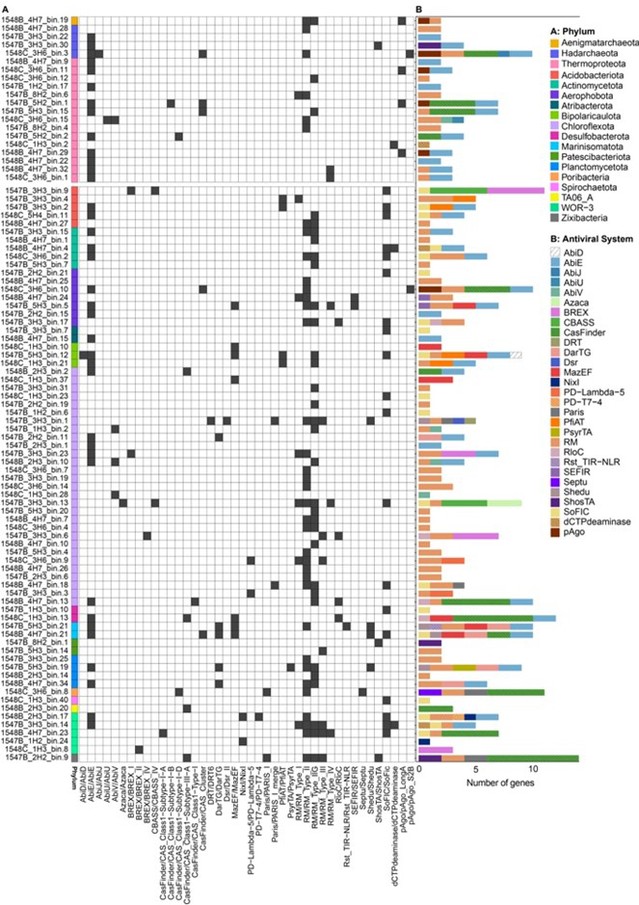
Microbial defense systems are central to virus-host interactions and thus to microbial survival, but remain poorly studied in microbial communities of extreme environments. Here we examine the repertoire and distribution of microbial defense genes in hydrothermally influenced deep subsurface sediments and rocks of the Guaymas Basin (Gulf of California). Restriction– modification (RM) and abortive infection (Abi) systems were broadly distributed across the examined sediment depths, and CRISPR–Cas systems were primarily detected within temperate surficial sediments. Prokaryotic Argonaute (pAgo) genes were found mostly in archaeal MAGs at elevated temperatures up to 81.8°C. Overall defense gene repertoire declines downcore, as temperature increases and phylogenetic host range narrows, with phylogeny as the decisive control factor. We suggest that these defense systems, together with DNA repair mechanisms, protein maintenance activities, and RNA modification pathways, constitute a survival toolkit for the hydrothermally influenced subsurface, where energy limitation and temperature extremes select for resilient microbial communities.
Full Article: https://doi.org/10.1093/ismeco/ycag200